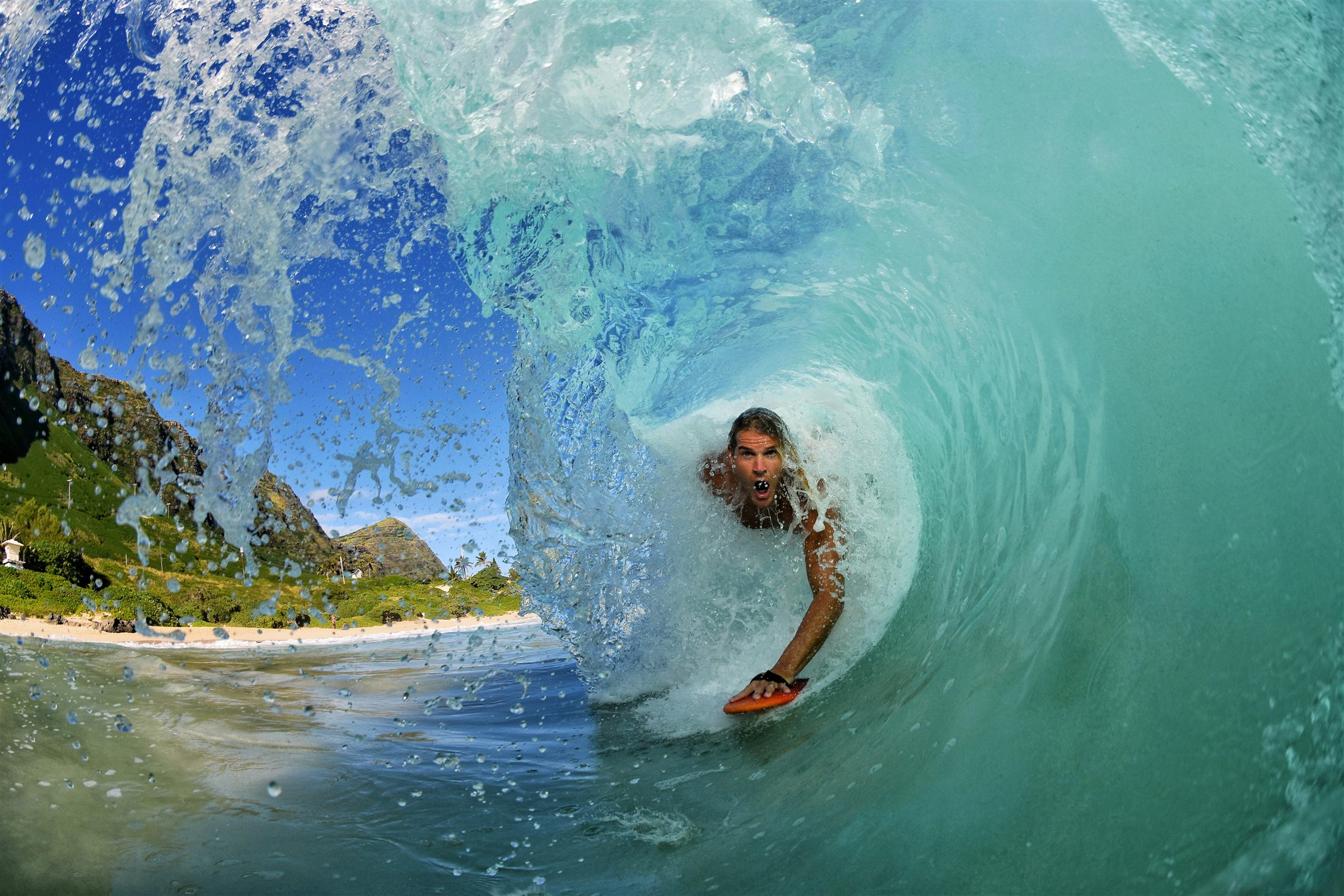
From thick Gold Coast barrels to shallow Sydney slabs, Australia’s East Coast has waves that don’t care how good you think you are.
SHOREY™ | Surf Feature · Australia
Australia’s East Coast has no shortage of beautiful beaches, postcard-perfect points and long, peeling waves. But tucked between the famous surf towns are some seriously intimidating breaks.
We’re talking waves that suck dry over shallow reef, unload with enough force to make you rethink your equipment, and produce barrels that look absolutely ridiculous from the beach.
Some are legendary point breaks. Others are slabs that seem to have been designed specifically to punish bad decisions.
And the best part? You don’t have to travel to Western Australia to find some of the country’s most hardcore surf.
Welcome to the East Coast’s heavy hitters.
1. Cape Solander — The Ours
Kurnell, Sydney, New South Wales
If you like your waves thick, square and dangerously close to the reef, Cape Solander belongs on your radar.
Known throughout the surfing world as The Ours, this notorious Sydney slab has built a reputation for producing some seriously heavy waves. When a powerful swell hits the right combination of direction and conditions, the wave stands up over shallow rock and throws a thick, powerful lip.
There is nothing particularly forgiving about the takeoff. The margin for error is small, and getting caught inside can be a brutal experience.
The Ours has become a proving ground for surfers and bodyboarders who specialize in heavy water. It isn’t a wave you paddle into just because it looks good from the car park.
It’s a wave you study, respect and approach with serious preparation.
2. Shark Island — Cronulla’s Mutant
Cronulla, Sydney, New South Wales
There are waves that barrel. Then there is Shark Island.
Sitting just offshore from Cronulla, this famous slab is one of Australia’s most recognizable heavy-water waves. It is known for its thick, wide barrels and shallow reef, with a takeoff that can leave very little room for mistakes.
The Island has a long history in Australian surfing and bodyboarding, attracting riders who specialize in waves that most people would rather watch from the rocks.
What makes it so fascinating is the shape. The wave can throw a wide, square barrel that looks almost unreal when it stands up properly.
But don’t let the photographs fool you. The reef is shallow, the consequences are real, and a bad wipeout can become serious very quickly.
Shark Island doesn’t hand out easy rides.
3. Voodoo — The Heavy Left
Cronulla, New South Wales
Cronulla has another weapon in its lineup.
Voodoo is a challenging, powerful left-hand reef break that attracts experienced surfers looking for something with a little more consequence.
Unlike a mellow beach break, reef waves demand precision. The takeoff, positioning and timing all matter, particularly when the swell builds and the wave starts throwing serious water.
Voodoo is part of what makes the Cronulla coastline such an important part of Australia’s heavy-water surf culture.
Between Shark Island, Cape Solander and Voodoo, Sydney’s southern coastline has a serious reputation for producing waves that demand respect.
4. Deadmans — When Sydney Goes Big
Manly, Northern Sydney, New South Wales
Sydney has a different personality when a major swell arrives.
Deadmans, off the Manly coastline, is a big-wave reef break that can come alive during powerful ocean swells. Most days, it isn’t the kind of wave that makes international headlines. But when the right swell arrives, the place can transform into a serious big-wave arena.
The scale of the wave is what gets people’s attention. Huge walls of water approach the reef, and surfers need the experience, equipment and support to handle the conditions.
Deadmans is a reminder that the East Coast isn’t just about beach breaks and crowded points. Under the right circumstances, Sydney can produce serious big-wave surfing.
5. Kirra — The Gold Coast Barrel Machine
Coolangatta, Gold Coast, Queensland
Not every hardcore wave needs a shallow slab and a rock shelf.
Sometimes the most intimidating wave is a long, fast, hollow sand-bottom point break.
Enter Kirra.
When the sandbanks, swell and wind line up, Kirra can produce some of the most spectacular barrels on the planet. The wave bends around the headland and races down the point, producing long, hollow sections that have helped define Gold Coast surfing.
Kirra has a legendary history, and when it really turns on, the surfing world pays attention.
The wave can be fast, powerful and unforgiving. A late takeoff or poor positioning can put you in a very uncomfortable place.
This is high-speed surfing at its finest.
6. Snapper Rocks — The Superbank Express
Coolangatta, Gold Coast, Queensland
Snapper Rocks is famous for long rides, but don’t mistake its reputation for an easy wave.
When the sandbank is properly formed and the swell arrives from the right direction, Snapper can connect through Rainbow Bay and Greenmount, creating the famous Superbank.
The result can be an incredibly long, fast-running right-hand wave with multiple barrel sections.
It is a wave that rewards speed, positioning and the ability to read what is happening several sections ahead.
And when the lineup is packed, there is another challenge: navigating the crowd while trying to find your own piece of the action.
Snapper may be famous for its long rides, but when the swell gets serious, it can deliver plenty of consequences.
7. Lennox Head — The North Coast Powerhouse
Lennox Head, Northern New South Wales
Lennox Head has that unmistakable North Coast beauty: a spectacular headland, an open coastline and a right-hand point that can produce long, powerful rides.
But don’t let the laid-back town fool you.
When the swell gets serious, Lennox can become a demanding wave. Its right-hand point is known for power and consistency, and it attracts experienced surfers who know how to handle a long, fast-moving wave.
It isn’t a shallow slab in the same category as Shark Island or The Ours. Its challenge comes from the power, speed and length of the wave.
When it gets good, Lennox is one of those places that reminds you why Australia’s East Coast has such a strong surfing identity.
What Makes These Breaks So Special?
The East Coast has an incredible range of surf conditions.
Queensland delivers powerful points and long-running barrels. Northern NSW combines exposed beaches with serious point breaks. Sydney has a collection of shallow reefs and slabs that can turn a major swell into a full-blown spectacle.
But there is no universal recipe for scoring these waves.
At SHOREY™, we call it THE SHOREY™ TRIFECTA:
1. The right wind direction
The wind needs to cooperate with the coastline and the individual break.
2. The right tide
Some waves need more water, others come alive when the tide drops.
3. The right swell
Size, period and direction must match the wave’s particular setup.
Get those three ingredients together and the ocean can put on a show.
And remember: a wave that looks incredible from the beach can be completely unsuitable for your ability. Heavy reef breaks and big-wave locations require extensive experience, local knowledge, appropriate equipment and a realistic understanding of the risks. Watch first, learn the conditions and never paddle out just to prove something.
The SHOREY™ Verdict
Australia’s East Coast has something for every kind of surfer, but these breaks are for people who understand that the ocean doesn’t owe anyone a ride.
From the thick slabs of Cronulla to the freight-train barrels of Kirra, and the powerful points of the Northern Rivers, this coastline has a serious collection of waves.
Some days they’re beautiful. Some days they’re terrifying. And on the rare days when everything lines up, they’re absolutely unforgettable.
SHOREY™
For the love of waves, shorebreak, and everything in between.
Respect the ocean. Understand the break. Ride what the ocean gives you.
Cover photo: Drew Farwell on Unsplash