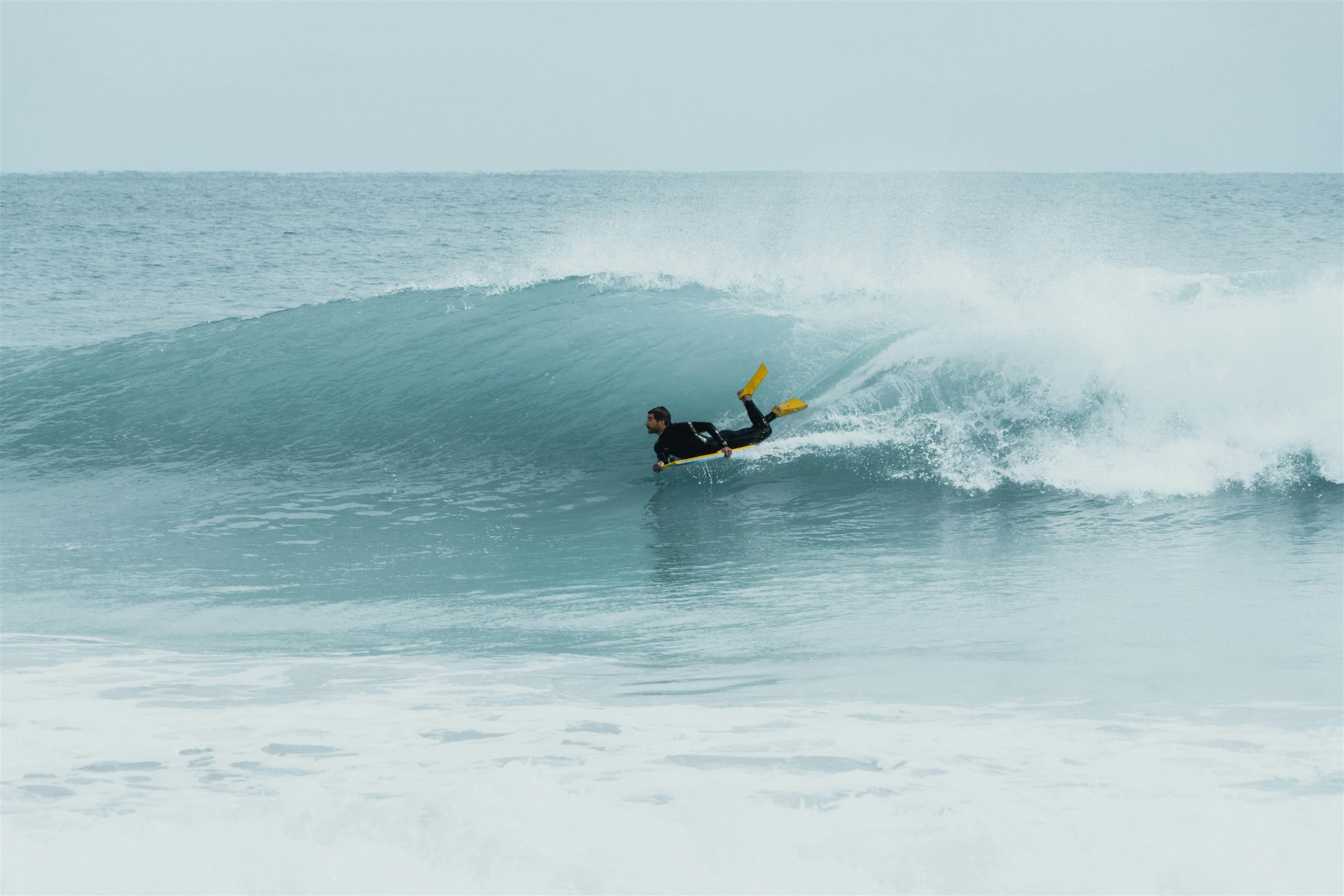
A remote stretch of Namibian coastline, a powerful Atlantic swell, and one of the longest, hollowest left-hand barrels on the planet. Welcome to the ultimate surf pilgrimage.
SHOREY™ | Surf Travel Feature · Namibia, Africa
There are surf trips, there are bucket-list surf trips, and then there is Skeleton Bay.
Imagine driving across an endless desert landscape, with towering sand dunes on one side and the cold Atlantic Ocean on the other. Somewhere along this remote coastline, when the swell, wind and sandbank align, one of the most extraordinary waves on Earth comes to life.
A long, fast, hollow left-hand barrel that seems to go on forever.
Welcome to Skeleton Bay, Namibia.
This isn’t your typical tropical surf destination. There are no beachfront resorts, no crowded boardwalks and no warm-water sessions in boardshorts. This is a remote desert surf mission where the journey is part of the adventure and the reward can be one of the longest barrel rides in surfing.
For anyone who lives for heavy waves, this is about as good as a surf pilgrimage gets.
Where in the World Is Skeleton Bay?
Skeleton Bay, also known as Donkey Bay, is located near Pelican Point, just outside Walvis Bay on Namibia’s Atlantic coastline.
The wave breaks along a shifting sand spit, where powerful Atlantic swell wraps around the point and races down the beach.
The setting is almost surreal. On one side, the cold Atlantic Ocean. On the other, the immense Namib Desert.
It’s a landscape that feels like another planet, and its remote location is part of what makes this destination so special.
The Wave: A Barrel That Just Keeps Going
Let’s talk about the reason surfers travel halfway around the world.
Skeleton Bay is a world-famous left-hand sand-bottom point that can produce extraordinarily long, hollow rides. On exceptional days, waves have been reported running well over a kilometre, with some estimates approaching two kilometres.
Think multiple barrel sections, incredibly fast walls and a current that can carry you down the point in a hurry.
The wave isn’t simply long. It’s technically demanding.
The takeoff can be critical, the barrel can become extremely shallow, and the current makes positioning difficult. Miss the opportunity and you could find yourself paddling hard or walking a long way back up the beach.
This is not a beginner’s wave. It demands serious experience, confidence in heavy water and the ability to handle powerful, hollow surf.
Skeleton Bay rewards surfers who know exactly what they’re doing.
When Should You Go?
Timing is everything.
The main surf window generally falls during the Southern Hemisphere winter, approximately May through September, with June, July and August often regarded as prime months.
During this period, powerful Southern Ocean weather systems generate long-period south and southwest groundswell that travels north toward Namibia.
But there’s a catch.
Skeleton Bay is notoriously fickle. You can spend a week in Namibia and never see the wave at its absolute best. Then a particular swell arrives, the wind cooperates, and suddenly the desert coastline becomes one of the most exciting places in surfing.
The key ingredients:
- Swell: Powerful, long-period south-to-southwest groundswell.
- Wind: Easterly to southeasterly winds are generally favorable offshore directions.
- Tide: The changing sandbank and tidal conditions influence how the wave breaks.
- Timing: The best sessions depend on the precise alignment of swell, wind and bank.
Don’t book a short weekend and expect Skeleton Bay to deliver. Give yourself a proper window and enough flexibility to move when the forecast comes together.
Getting There: The Desert Surf Mission
Getting to Skeleton Bay is part of the adventure.
Most international visitors connect through Windhoek or arrange flights into Walvis Bay, depending on their travel route and airline availability.
Walvis Bay is a practical base for reaching the surf area. Swakopmund, farther north, is another popular option, offering more restaurants, accommodation and tourism activities.
The final approach is where things get interesting.
Skeleton Bay is reached through remote coastal terrain, and access can involve driving across sand and salt flats. A suitable 4×4 and knowledge of the route are essential.
Our recommendation? Use a local surf guide.
A guide can help you understand the swell window, navigate desert access tracks, arrange transportation and stay within permitted access areas.
Don’t assume every track is open for unrestricted off-road driving. Check current Dorob National Park requirements and permitted access routes before heading out.
What to Pack: This Is Not a Tropical Surf Trip
One of the biggest surprises for first-time visitors is the water temperature.
Namibia’s coastline is influenced by the cold Benguela Current, which brings chilly water and contributes to the region’s famous coastal fog.
Forget the boardshorts.
For the winter surf season, plan around a good-quality cold-water wetsuit. A 4/3 mm suit is a useful starting point, with boots and potentially a hood depending on your cold tolerance and the conditions.
Your travel checklist should include:
- A quality cold-water wetsuit
- Surf boots
- Multiple leashes
- Extra boards or a reliable repair plan
- Cold-water surf wax
- First-aid supplies
- Plenty of drinking water and food
- Reliable navigation and emergency communication
- Comprehensive travel and surf insurance
Remote surf locations demand preparation. There is no convenient surf shop around the corner when something breaks.
Where to Stay: Walvis Bay or Swakopmund?
If the primary mission is Skeleton Bay, Walvis Bay makes logistical sense.
It’s a practical base for accessing the surf area, with accommodation, restaurants and essential services nearby.
If you want a broader Namibian coastal experience, Swakopmund is an excellent alternative. It’s a lively seaside town with a strong tourism scene, restaurants, outdoor adventures and plenty to explore between sessions.
Either way, don’t build the entire trip around one wave. Skeleton Bay may not cooperate every day, so having other activities and surf options makes the journey much more enjoyable.
When the Surf Is Flat: Explore Namibia
This is where the trip becomes something bigger than surfing.
Namibia has some of the most remarkable desert landscapes in the world.
Sandwich Harbour
A spectacular meeting of enormous dunes and the Atlantic Ocean. Guided 4×4 excursions offer an unforgettable look at this dramatic coastal landscape.
Cape Cross Seal Reserve
Home to a huge Cape fur seal colony along the Skeleton Coast. It’s an incredible wildlife experience, although the smell is something you’ll remember!
Sossusvlei and Deadvlei
If you have time to travel inland, the towering red dunes and white clay pans are among Namibia’s most iconic landscapes.
Swakopmund
Spend a day exploring the coastal town, enjoying local restaurants, checking out the surf scene and recovering before the next swell arrives.
The SHOREY™ Trifecta: The Reason You Came
Skeleton Bay is the ultimate reminder that the best waves are about more than just swell size.
You can have a massive swell and still miss the magic. You can have offshore winds and no decent bank. You can have the perfect tide and the wrong swell direction.
At SHOREY™, we call it THE SHOREY™ TRIFECTA:
1. The perfect wind direction
Offshore conditions that groom the wave and keep the barrel clean.
2. The right tide
The tidal stage that works with the shifting sandbank.
3. The right swell
The correct size, period and direction to bring the wave to life.
When those three ingredients come together, Skeleton Bay can produce the kind of waves that make surfers book flights from the other side of the planet.
And when they don’t? You still get the Namib Desert, the Atlantic Ocean and an adventure that very few surf destinations can match.
The SHOREY™ Verdict
Skeleton Bay isn’t for everyone.
It’s remote, cold, unpredictable and technically demanding. It doesn’t offer the convenience of a tropical surf resort or guarantee a perfect wave every morning.
But for experienced surfers who live for long, hollow barrels, it represents something special.
A desert coastline. A powerful Atlantic swell. A shifting sandbank. And the possibility of a ride that seems to go on forever.
This is one of those places where the journey is just as memorable as the wave.
Put Skeleton Bay on the list. Watch the forecast. Find the window. Chase the swell.
SHOREY™
For the love of waves, shorebreak, and everything in between.
Respect the ocean. Understand the break. Ride what the ocean gives you.
Cover photo: Luis Santiago on Unsplash