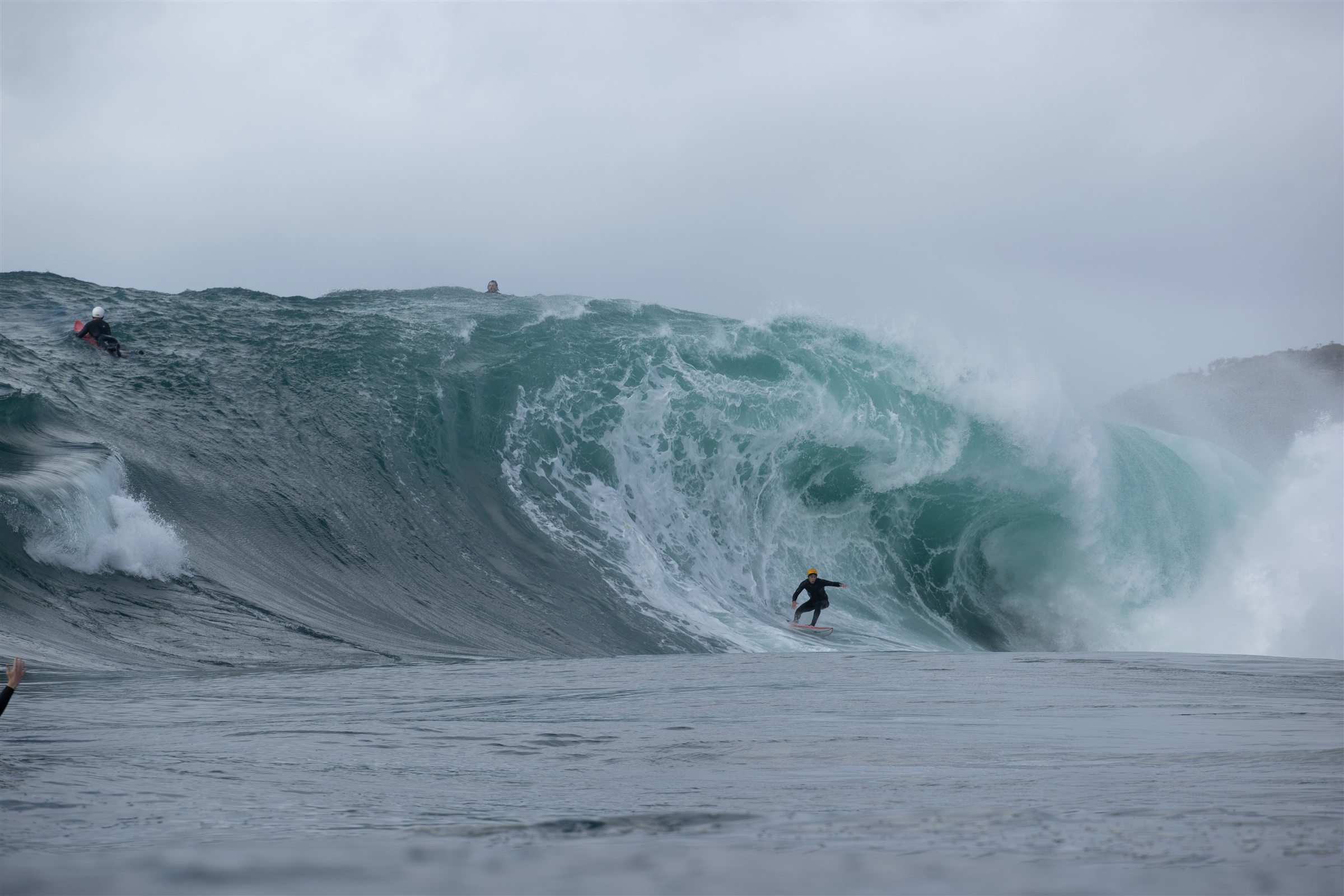
How winter storms, seasonal sand movement, and powerful Pacific swells reshape our coastlines and transform the surf breaks we ride.
The ocean is constantly changing the coastline. Every wave, every tide, and every storm contributes to a never-ending process of moving, removing, and redistributing sand.
For surfers, these changes are more than just a change of scenery. They influence where waves break, how they break, how powerful they become, and whether a familiar surf spot will look anything like it did last season.
As El Niño develops across the Pacific, the relationship between ocean energy and coastal erosion becomes particularly important. Stronger winter storms, powerful swells, and elevated coastal water levels can dramatically alter beaches, sometimes leaving behind changes that last long after the storms have passed.
But to understand what El Niño can do to our beaches, we first need to understand something fundamental: beaches naturally gain and lose sand throughout the year.
1. The Natural Cycle: Beaches Are Always Changing
One of the biggest misconceptions about coastal erosion is that when a beach loses sand, that sand is gone.
In many cases, it hasn’t disappeared. It has simply moved.
Beaches are dynamic environments that constantly exchange sand between the shoreline, offshore sandbars, deeper water, and neighboring stretches of coastline. This process is known as seasonal beach-profile cycling.
In many parts of California, the natural cycle generally follows a familiar pattern.
Summer: The Beach Rebuilds
During summer, wave conditions are often calmer and less energetic than during winter storm season.
These conditions frequently encourage sand to move from offshore sandbars back toward the shoreline. As sand accumulates, beaches can become wider, flatter, and more inviting.
This is why some beaches that appear narrow and heavily eroded in winter can look dramatically different by late summer.
The shoreline is rebuilding itself.
Winter: The Ocean Moves Sand Offshore
Winter brings a different set of conditions.
Powerful Pacific storms generate larger, more energetic waves. These waves can transport substantial quantities of sand away from the shoreline and toward offshore sandbars and deeper water.
As this happens, beaches can become narrower and steeper. Sandbars shift farther offshore, dunes become exposed, and waves may begin breaking much closer to the beach.
The beach hasn’t necessarily lost all its sand. Much of it may be temporarily stored offshore.
This seasonal exchange is a natural part of coastal behavior.
However, not every beach follows exactly the same pattern. Some beaches experience summer erosion and winter recovery, depending on their orientation, local currents, swell direction, geology, and surrounding coastal structures.
The important distinction is that sand movement is not always the same as permanent sand loss.
2. Understanding El Niño: When the Pacific Changes the Rules
El Niño is a recurring climate phenomenon associated with unusually warm ocean temperatures across the central and eastern equatorial Pacific.
These changes influence atmospheric circulation and can alter storm tracks and wave-generating weather systems across the Pacific Ocean.
For California, particularly Southern California, strong El Niño events can increase the potential for powerful winter storms, energetic surf, elevated coastal water levels, and significant beach erosion.
The combination can be especially destructive.
Large waves carry enormous amounts of energy. When they reach shallow coastal waters, that energy interacts with the ocean floor, sandbars, beaches, dunes, and coastal cliffs.
The results can include:
- Increased wave run-up and coastal flooding.
- Significant movement of sand offshore.
- Narrowing beaches and shoreline retreat.
- Erosion of dunes and coastal bluffs.
- Damage to coastal infrastructure.
- Changes to underwater topography and surf breaks.
El Niño doesn’t automatically mean every California beach will experience more erosion. Local conditions and individual storm patterns matter. But strong events can substantially increase coastal erosion risks.
3. When Seasonal Recovery Can’t Keep Up
Under normal conditions, many beaches experience a seasonal cycle of erosion and recovery.
Winter storms move sand offshore. Calmer conditions during the warmer months often help transport some of that sand back toward the shoreline.
But what happens when winter storms become exceptionally powerful or occur repeatedly?
The natural recovery process can fall behind.
An unusually energetic winter can transport more sand offshore than calmer summer conditions can return. Elevated water levels can also allow waves to reach farther up the beach, increasing erosion of the upper shoreline and dunes.
This is where El Niño becomes particularly significant.
Instead of experiencing a typical seasonal change, some beaches can experience substantial erosion that persists into the following summer.
Some beaches recover relatively quickly. Others may take multiple seasons to rebuild. In certain locations, sand can be permanently lost from a particular beach system through offshore transport or longshore movement.
The distinction between temporary seasonal erosion and longer-term shoreline retreat is critical.
4. How Erosion Changes the Waves We Ride
For surfers, one of the most interesting consequences of beach erosion is what happens to the surf itself.
A surf break is not simply a wave breaking at a particular location. Its behavior depends on underwater topography, sandbar formations, reef structures, swell direction, wave period, and tides.
When storms redistribute sand, they effectively redesign the underwater landscape.
Sandbars can disappear, shift, deepen, or reform in completely different locations.
A beach that once produced long, rolling waves may suddenly develop steep, powerful peaks. A familiar sandbar might stop working altogether, while another section of the beach begins producing better waves.
These changes can influence:
- Where waves begin breaking.
- The shape and steepness of the wave face.
- Whether waves peel or close out.
- The location of sandbar peaks.
- The power and intensity of shorebreak.
- How a surf spot responds to different tides and swell directions.
The same swell arriving at the same beach can produce an entirely different wave simply because the underwater landscape has changed.
For surfers, understanding the beach is just as important as understanding the swell.
5. Shorebreak: Where the Ocean Meets the Sand
Shorebreak is one of the most fascinating and powerful expressions of wave energy.
Unlike traditional reef or point breaks, shorebreak waves often unload directly over shallow sand near the shoreline.
Their behavior is heavily influenced by the depth of the water immediately offshore and the slope of the beach.
When erosion changes the beach profile, the waves can begin breaking closer to shore or with a more abrupt transition from deeper to shallower water.
Depending on the conditions, this can create steep, pitching waves that break with tremendous force.
For bodyboarders and shorebreak enthusiasts, these changes can be especially significant.
The difference between a manageable wave and a heavy, shallow-water impact can come down to relatively small changes in the underwater sand formations.
But there is a trade-off.
The same conditions that create spectacular shorebreak can also create extremely dangerous environments. Powerful waves breaking over shallow sand can cause serious head, neck, and spinal injuries.
The ocean doesn’t distinguish between an experienced surfer and someone simply enjoying the beach.
Respecting the power of shorebreak is part of understanding the environment.
6. The History of El Niño and California’s Coastline
California has experienced several significant El Niño events that provide valuable insight into the relationship between ocean conditions and coastal erosion.
The winters of 1982–83 and 1997–98 brought substantial coastal impacts, including powerful surf, flooding, and beach erosion.
The 2015–16 El Niño also produced significant erosion across California.
During that event, researchers documented extensive coastal changes. A USGS study of central California beaches reported average erosion of approximately 45.7 meters across its surveyed sites.
That’s approximately 150 feet.
These events demonstrate that the combination of powerful waves, elevated water levels, and vulnerable coastal geography can produce dramatic shoreline changes.
They also illustrate why monitoring beaches over multiple seasons is important. A single photograph of an eroded beach doesn’t necessarily tell us whether the sand is temporarily offshore or whether the coastline is experiencing longer-term retreat.
7. The 2026–27 El Niño: A Coastline Worth Watching
The developing 2026–27 El Niño makes this an important winter for California’s coastline.
As ocean temperatures and atmospheric conditions evolve, the potential for powerful Pacific storms and energetic winter surf deserves close attention.
For coastal communities, the primary concerns include erosion, flooding, damage to infrastructure, and the vulnerability of exposed beaches and bluffs.
For surfers, the season presents another opportunity to observe how changing ocean conditions influence familiar breaks.
Which beaches will lose their sand? Which sandbars will shift? Which breaks will transform? And how much of the shoreline will recover when calmer conditions return?
These are questions that can only be answered by observing the coastline over time.
El Niño is not a guarantee of bigger surf at every beach or greater erosion everywhere. The actual outcome depends on storm tracks, swell direction, water levels, local geography, and the timing of individual weather events.
But the potential for significant change is real.
8. The Coastline Is Never Permanent
Perhaps the most important thing to understand is that beaches are not permanent geographical features.
They are constantly evolving environments.
Sand moves. Sandbars shift. Dunes grow and disappear. Beaches expand and contract. Coastal cliffs retreat.
The ocean is continually redesigning the landscape.
For surfers, this means the break we know today may not be the break we return to next season.
A familiar peak can disappear. A new one can develop. A beach that once offered a wide stretch of sand may become a narrow strip beneath an exposed bluff.
Sometimes the changes are temporary. Sometimes they last for years.
And occasionally, an exceptionally powerful winter changes the coastline in ways that take decades to recover from, if recovery happens at all.
Understanding El Niño and seasonal sand movement gives us a better appreciation of the forces shaping the places we surf.
The ocean gives us the waves. It also determines the landscape on which those waves break.
The coastline is never finished. Every storm, every swell, and every tide leaves its mark. And sometimes, an El Niño winter changes the landscape for years to come.
SHOREY™ | Respect the ocean. Understand the break. Ride what the ocean gives you.
Cover photo: byronetmedia on Unsplash